Books, big ideas, and teaching that helps students learn
 ‌ ‌ ‌ ‌ ‌ ‌ ‌ ‌ ‌ ‌ ‌ ‌ ‌ ‌ ‌ ‌ ‌ ‌ ‌ ‌ ‌ ‌ ‌ ‌ ‌ ‌ ‌ ‌ ‌ ‌ ‌ ‌ ‌ ‌ ‌ ‌ ‌ ‌ ‌ ‌ ‌ ‌ ‌ ‌ ‌ ‌ ‌ ‌ ‌ ‌ ‌ ‌ ‌ ‌ ‌ ‌ ‌ ‌ ‌ ‌ ‌ ‌ ‌ ‌ ‌ ‌ ‌ ‌ ‌ ‌ ‌ ‌ ‌ ‌ ‌ ‌ ‌ ‌ ‌ ‌ ‌ ‌ ‌ ‌ ‌ ‌ ‌ ‌ ‌ ‌ ‌ ‌ ‌ ‌ ‌ ‌ ‌ ‌ ‌ ‌ ‌ ‌ ‌ ‌ ‌ ‌ ‌ ‌ ‌ ‌ ‌ ‌ ‌ ‌ ‌ ‌ ‌ ‌ ‌ ‌ ‌ ‌ ‌ ‌ ‌ ‌

View in your browser

ABA logo image

Dear ,


Happy June! I’m back with the latest installment of Inside the Art Brand Alliance, a monthly look at what’s happening in our professional network.


This month, we’re talking about two creative-business paths that come up often for art brand entrepreneurs: publishing and teaching.


Both can be powerful extensions of your work as an artist. They’re also great for getting you to think more deeply about what you’re really wanting to share, who it’s for, and how to shape the experience so it truly serves your audience.


First, here’s an insider peek at a recent conversation…


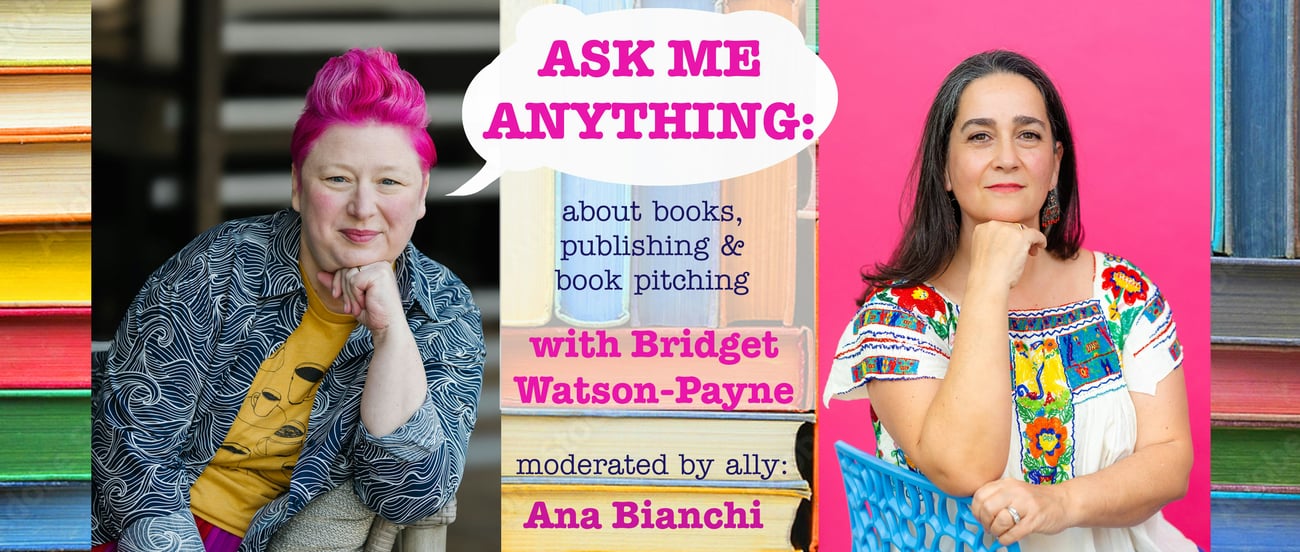
Dip into the ABA Well 💦 Editor Bridget Watson Payne, “Ask Me Anything about Books, Publishing, and Book Pitching”

AMA with Bridget Watson Payne image graphic

Recently inside the ABA, we gathered for an “Ask Me Anything” conversation with editor, writer, artist, and longtime book person Bridget Watson Payne. Bridget spent more than 20 years at Chronicle Books, where she worked as an editor of illustrated books. The event was hosted by our Ally, Ana Bianchi, who is a published artist herself!


In this fantastic conversation (replay available in our network), Bridget helped us see into the world of publishing with both more imagination and more realism. Here are some highlights!


Thinking like an author


You may identify primarily as an illustrator or artist, but stepping into the realm of publishing your own work means embracing the idea of authorship, too. Bridget helped us see that “author” does not always mean “writer” in the conventional sense of the word. It’s broader than that.


While you may indeed have a story to tell, “authorship” in the world of art publishing can involve purely visual storytelling, teaching, journaling prompts, illustrated quotations from other writers, and more. (A related reframe: sometimes the best container for your idea might be a form of publication you wouldn’t necessarily call a “book,” such as a guided journal, or a card deck.)


What’s your point of view?


While Bridget reassured us that publishing is not only for people who identify as writers, she did stress the importance of a clear point of view—what makes your way of seeing the world distinctive? Or in her wonderful words, “What makes you a weirdo? I think those are the things to really push into and gravitate towards, because that's your special sauce.”


Why is “point of view” so important, you might ask? Bridget explained that in a crowded publishing landscape, the thing that makes a book compelling is rarely “no one has ever done this topic before.” More often, it’s that the author (the artist) has a particular lens, voice, story, visual language, or obsession that gives familiar material fresh meaning.


With this playful and imagination-inspiring foundation, the discussion moved into the practical realities of publishing: advances, royalties, copyright, categories, audience, proposals, timelines, editing, agents, sales teams, and the long, elastic relationship an author may have with a book.


Where does your work fit?


Let’s look at one of those more practical issues that might surprise you: the role of “categories.” Bridget explained that publishers think in categories. Editors acquire in categories. Bookstores shelve in categories. Sales teams need to understand where a book belongs and who will buy it.


In other words, a book can have more than one audience, but it still needs a primary home. Is it an art book? A design book? A gift book? A how-to book? A memoir? A journal? 


For artists, this can feel limiting because we don’t tend to think so rigidly. But Bridget and the published Allies in the room helped us see that category clarity doesn’t flatten your work. Instead, it helps your offering travel efficiently through the publishing universe, giving you the best possible chance of finding appreciative readers! 


A creative undertaking like no other


In addition to expanding our imaginations around what a book can be, and helping us better understand the nuts-and-bolts of the publishing world, Bridget gave us a feel for the emotional realities of this work. Chiefly: a book is not a quick project. 


Your book may begin as a private passion project long before it becomes a proposal. It may change shape dramatically before a publisher says yes. A proposal that gets you in the door may not be the exact book you ultimately make. Feedback may be blunt, clarifying, humbling, or all three. And the whole process can stretch across years.


Several Allies in the conversation shared from their own experiences of developing books: the long timelines, the many iterations, the moments when a piece of feedback suddenly revealed the real through-line, the way an idea had to become bigger than a personal archive or private fascination in order to serve a wider audience.


That, to me, was one of the most valuable parts of the discussion. It wasn’t only an expert explaining publishing from the inside—it was a conversation among artists and authors, with an editor who is an artist-author herself!


Bring it to the ABA!


Is there a topic or an idea you’re curious to explore in book form? Hit reply to let me know!


And remember, the Art Brand Alliance community offers opportunities to learn and discuss not just book publishing but many other creative undertakings, all with this same kind of thoughtful, multi-perspective view.


From the blue-sky imagination phase, through the practical steps of getting-the-thing-done, and the emotional experience of the thing, the ABA community can be with you every step of the way.


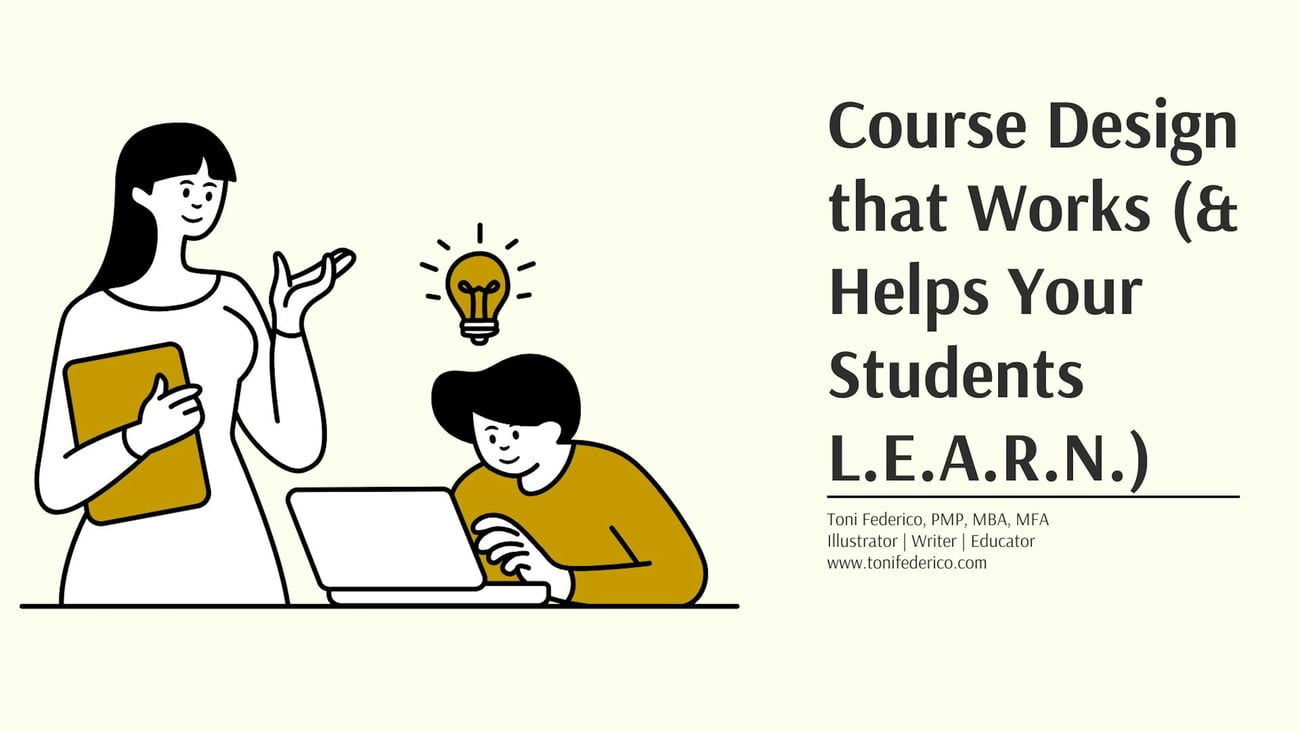
Invitation 🎟️ Course Design that Works (& Helps Your Students L.E.A.R.N.) with Toni Federico

ABA Course Design with Toni Federico graphic image

Many artists are inspired to teach—art techniques, creativity-boosters, business management skills, and more. For those who do it well, teaching can be a meaningful way to share expertise, deepen community, diversify income, and help others experience the joy and transformation of creative growth.


But creating a course is not the same thing as gathering everything you know and presenting it in order. A course is an experience. And if we want students to make progress, feel supported, and actually use what we’re teaching, we need to think about how people learn.

And that’s where our Ally Toni Federico—artist, teacher, project manager, and online course designer—comes in. She’s leading a session for the ABA this month on how to design courses that genuinely help students learn.


In this presentation, she’ll introduce her LEARN® Method. It’s a simple, practical framework for designing courses that set students up for success by working with the way the brain processes information.


We’ll look at questions like:

  • How do you structure your content so students can follow it?

  • How do you build in engagement that keeps people moving forward?

  • How do you avoid overwhelming students with too much information?

  • How do you create a course that feels focused, effective, and genuinely helpful?

If you’ve ever taken a course that left you feeling inspired but overwhelmed, or excited at first and then quietly lost, you know how much structure matters. That’s why the heart of Toni’s framework is not about squeezing more “content” into a course. It’s about designing with care, so your teaching doesn’t simply deliver information, it helps your students metabolize it. 


There’s a lovely business-side benefit, too. When your students actually learn, make progress, and achieve meaningful results, they’re more likely to finish the course, trust your teaching, recommend your work, and come back for more!


ABA members can join live and access the replay afterward.


Thursday, June 11, 2026
9am Pacific


If you’d like to be in the room for conversations like ours, where wide-ranging creativity and practical business meet and mingle, we’d love to welcome you!


About this series

Each month in Inside the Art Brand Alliance, I share a curated glimpse into conversations unfolding inside our private member network, plus an invitation to join us.


Because our community is confidential by design, it can be hard from the outside to understand just how much thoughtful exchange, professional development, and mutual support happens inside. This series offers a small but meaningful taste.


You can browse past issues here.


And as always, if you have questions about membership, simply hit reply. I’ll be happy to hear from you.


Warmly,


Betsy


Betsy Cordes

Founder/Director Art Brand Alliance

betsy@artbrandalliance.com

Art Brand Alliance on Instagram


Email Marketing by ActiveCampaign